








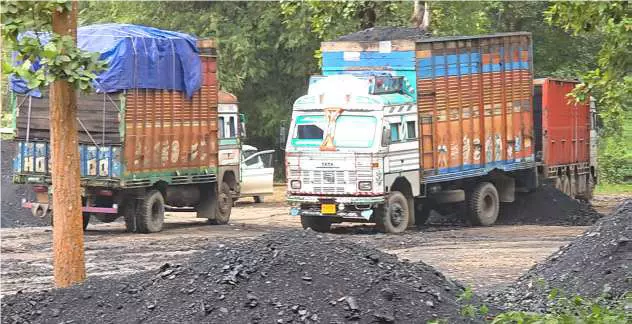
The Punjab and Haryana High Court on Wednesday questioned Punjab Government’s legal authority to divert its buses from their designated routes to transport people to “Moga Maha Rally”. Among other things, the bench observed that no provision had been shown under which buses operating under statutory permits could be requisitioned, utilised or diverted for another purpose.
“It will have to be examined whether the authorities have passed any orders consistent with the provisions of the Motor Vehicles Act, 1988, under which such buses could be diverted for any other purpose,” the bench of Chief Justice Ashwani Kumar Mishra and Justice Rohit Kapoor asserted.
The bench added one of the issues also requiring determination was whether the state would be justified in departing from the statutory scheme for plying of road transport services by a State Transport Undertaking “merely because the smart ration cards are to be distributed at a particular rally”.
At the same time, the bench made it clear that it was not questioning the welfare initiative itself. “The laudable state action of issuing smart ration cards and ensuring the distribution of food is neither questioned, nor does this court intend to interfere with it in any manner. The question for consideration is whether the diversion of state buses for carrying persons from different districts to Moga is an inseparable part of the distribution of smart ration cards and whether such action has the sanction of law?” the bench observed.
It also took note of the commuters’ inconvenience by observing: “The ancillary question would be whether the inconvenience caused to common commuters who travel by these buses would be justified and also whether the state would be justified in requisitioning buses plying on different routes solely to facilitate the transportation of such persons to the venue itself.”
In a subsequent order passed later in the evening, the bench of Chief Justice Ashwani Kumar Mishra and Justice Rohit Kapoor recorded that the state had produced an order dated November 24 issued by the Moga District Magistrate, “vide which, the impugned action has been taken”. As the petitioner sought time to verify the document and respond, the matter was adjourned to November 26 at 10 am.
The matter has its genesis in a public interest litigation filed by Arshdeep Singh Sra seeking directions to restrain the state from transporting supporters and workers of the ruling AAP to an event at Matwani village in Moga, on November 26. The petitioner alleged that the programme was a political event and sought directions to ensure that government buses were not diverted from regular public transport services at the cost of ordinary commuters.
The petitioner relied on a statement allegedly published on AAP’s official website, which stated that the Moga rally would mark the commencement of the party’s 2027 election campaign, besides newspaper reports highlighting the inconvenience that could be caused to commuters.
The state, on the other hand, contested the petition, maintaining that the programme was a state-level function for the distribution of smart ration cards to beneficiaries. It produced an office order dated November 12 declaring the Chief Minister’s programme at Moga a state-level function.
The state informed the court that nearly six lakh citizens were to receive smart ration cards. It also relied on Section 87 of the Motor Vehicles Act, 1988, which empowered transport authorities to grant temporary permits for specified purposes, and referred to Sections 99(2) and 66 of the Act in support of its position.
The bench, however, noted that the state was seeking to justify the diversion under Section 87 of the Act, but it had not produced any temporary permit to substantiate its stand. The court observed: “We may note at the outset that, though the state action is sought to be justified with reference to Section 87 of the Act of 1988, no temporary permit has been placed before the court to justify such action.”
Examining the structure governing State Transport Undertakings, the bench explained that the statutory framework envisaged publication of a transport scheme, inviting objections and subsequently issuing permits to State Transport Undertakings. The court observed that the statutory scheme indicated that once such permits were issued, the buses were required to operate strictly in accordance with the scheme.
“The statutory scheme is, therefore, clearly indicative of the fact that once permits are issued to the State Transport Undertakings, the buses are to be plied strictly in accordance with such scheme. No provision has been shown to the court under which buses issued permits under Section 103 of the Act of 1988 could be requisitioned, utilised or diverted for any other purpose.”